☀️How Interactive Projection Can Transform Learning through play in Early Years Settings

Early Years settings are always looking for new ways to engage children, encourage active learning, and support development across the curriculum. As a result, interactive projection technology is becoming a popular solution. It combines education, movement, creativity, and sensory technology to create engaging learning experiences.

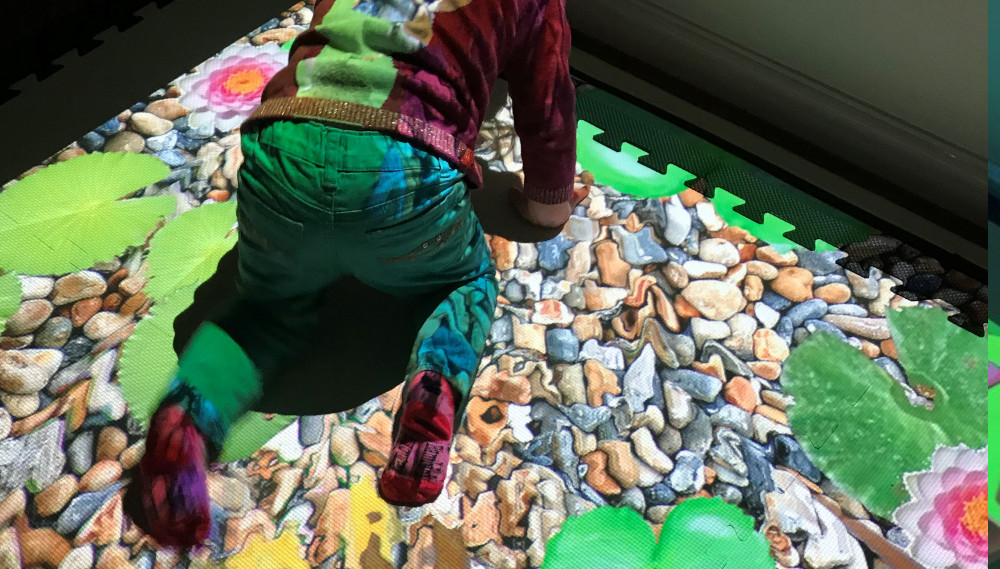
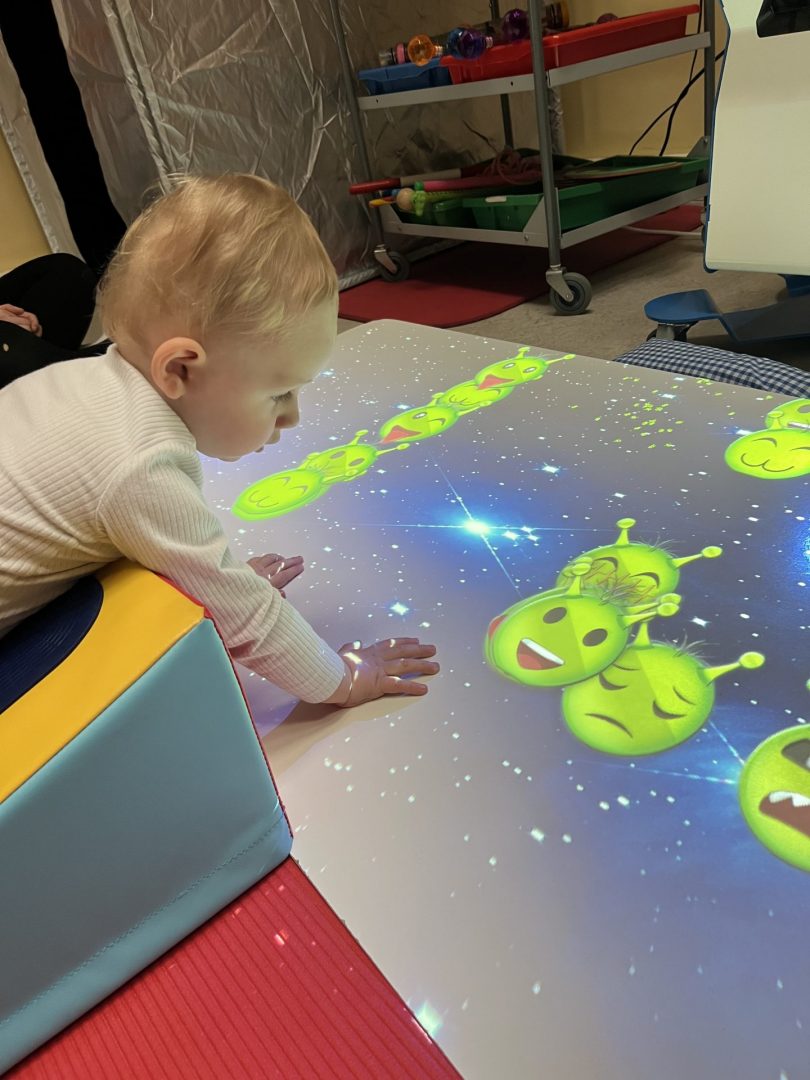
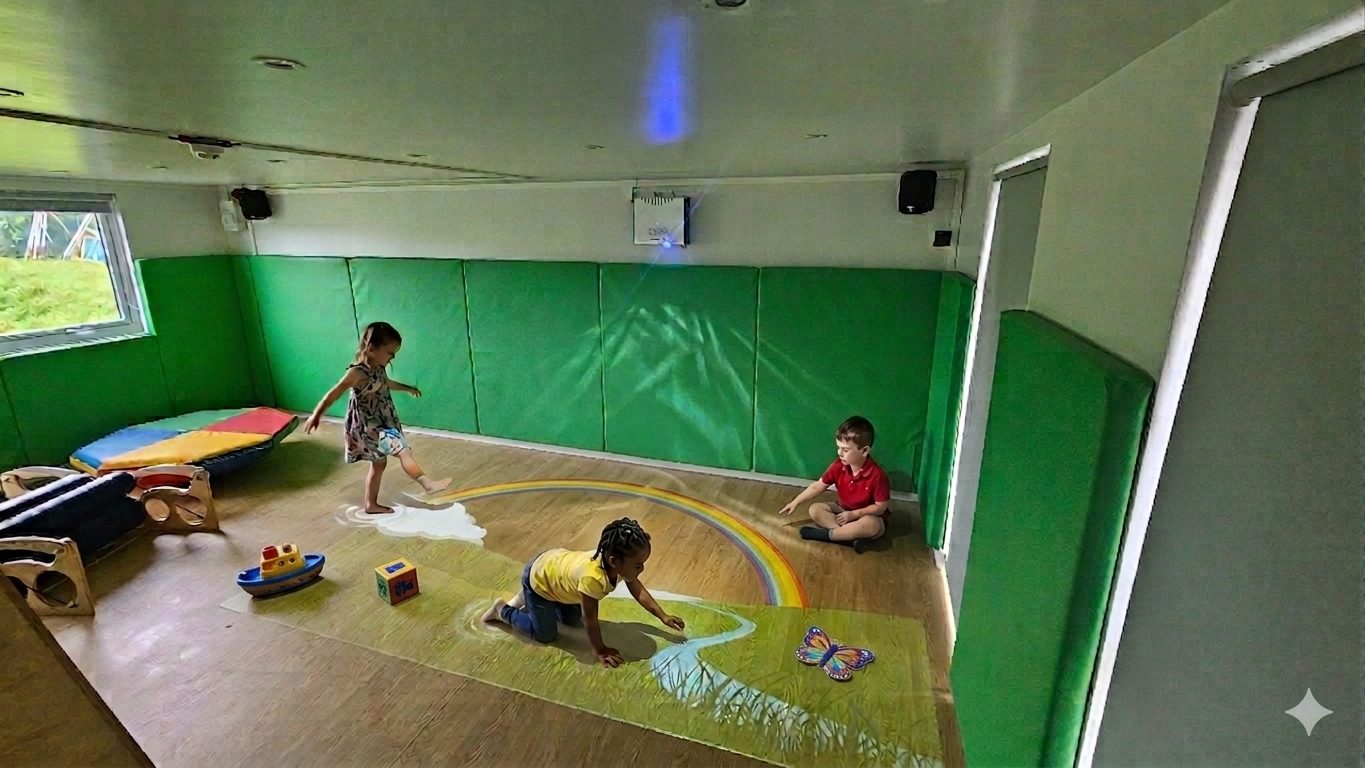
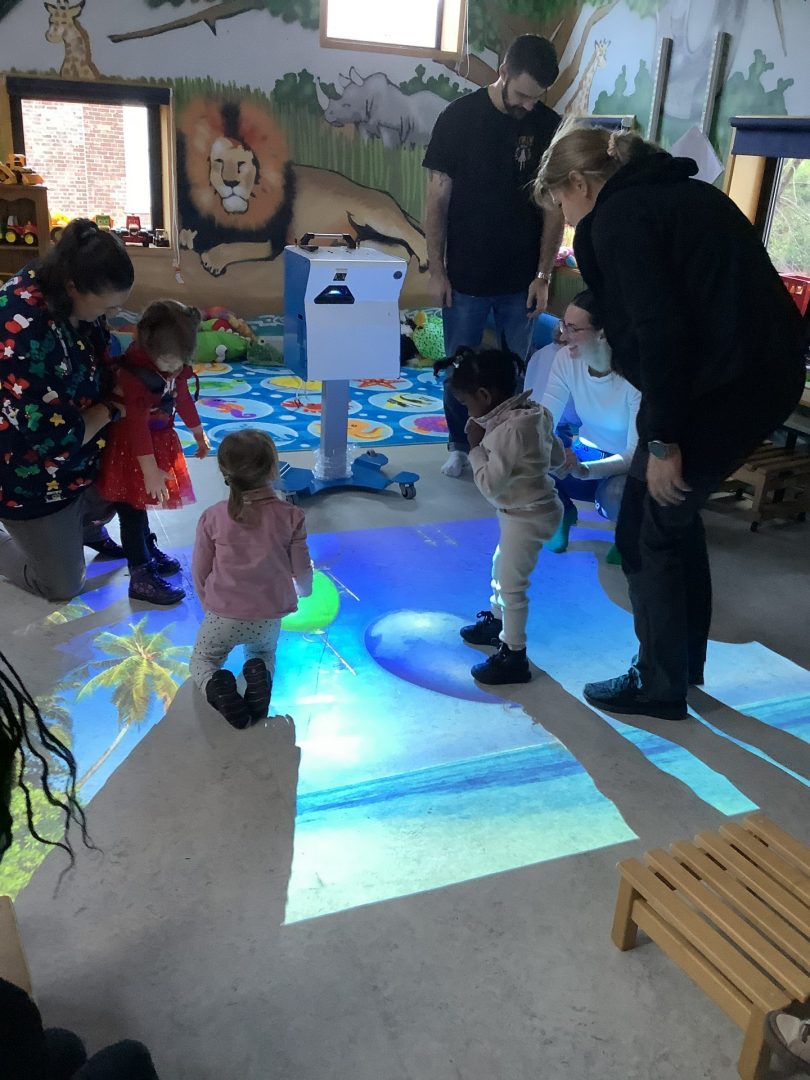
Unlike traditional learning tools, interactive projection transforms floors, tables, walls, and other surfaces into responsive learning spaces. Children can explore, interact, and discover through learning through play. By encouraging movement and interaction, it creates immersive activities that support educational goals and sensory development.

Encouraging Active Learning

Young children learn best when they take part in experiences rather than simply watch. For this reason, interactive projection encourages children to move, explore, and interact with digital content using their hands, feet, and whole bodies.

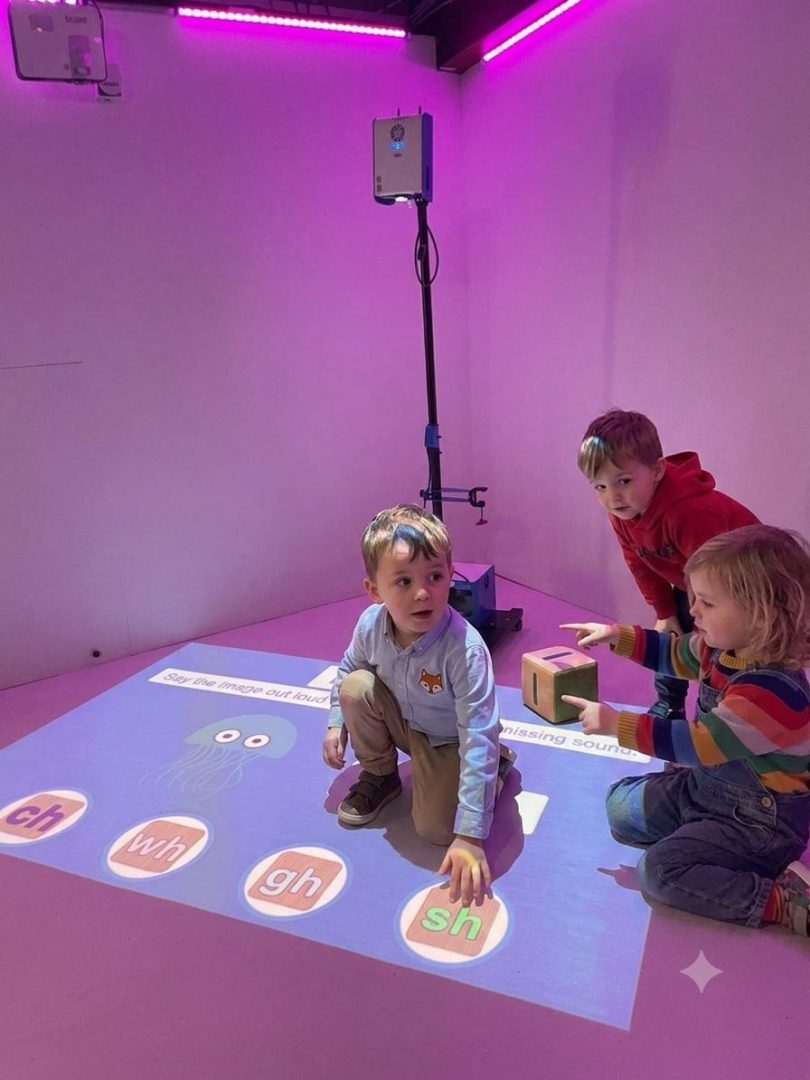
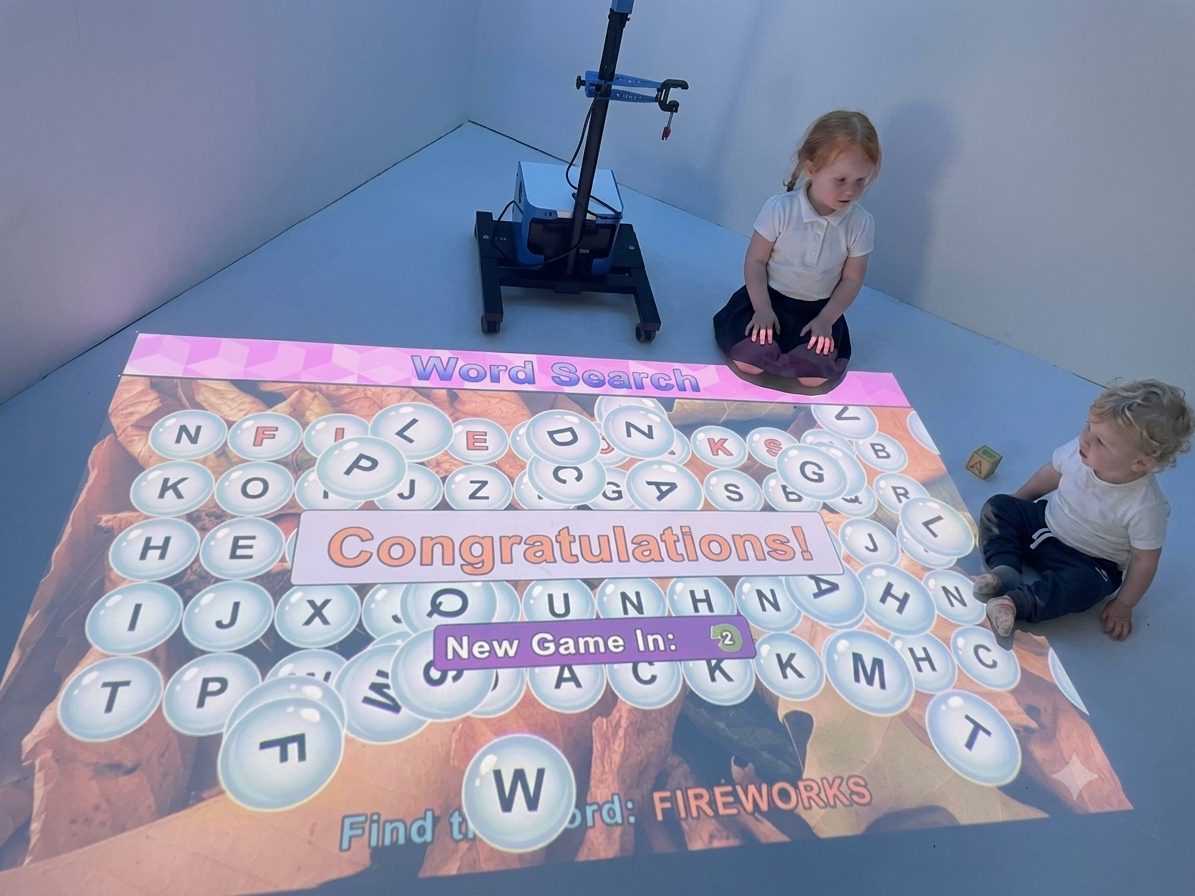
Through interactive activities, children build skills while having fun. They can stomp on letters, chase shapes, sort colours, or join interactive stories. These experiences keep children engaged and encourage curiosity. As a result, active participation can support concentration, confidence, and information retention.

Discover Imaginate software (installed on all products within the SENse Range) to explore more interactive learning experiences by clicking the button below.

✨What Is Interactive Projection?

Interactive projection is an innovative sensory technology that transforms everyday surfaces into engaging, interactive experiences. A projector and advanced sensors detect movement and respond instantly, allowing children to interact with digital content through touch, gestures, and physical movement.

Within Early Years settings, interactive projection supports the EYFS curriculum through educational games, sensory activities, storytelling, and movement-based learning. For example, children can chase fish across the floor, pop bubbles, practise counting, explore letters and sounds, or enter themed environments that encourage creativity, curiosity, and learning through play.

Furthermore, unlike traditional screens, interactive projection encourages children to move, collaborate, and take an active role in their learning. As a result, it provides an effective interactive learning technology solution that supports engagement, physical development, communication skills, and positive learning experiences in nursery and preschool environments.

Supporting the EYFS Curriculum

Activities can support all seven areas of learning within the Early Years Foundation Stage (EYFS).

Communication and Language

Interactive games encourage children to listen, follow instructions, and develop vocabulary through themed activities and storytelling experiences.

Physical Development

Movement-based activities help improve balance, coordination, gross motor skills, and spatial awareness while promoting healthy physical activity.

Personal, Social and Emotional Development

Many activities encourage turn-taking, teamwork, confidence building, and positive social interaction among peers.

Literacy and Mathematics

Children can engage with letters, sounds, numbers, counting, matching, and problem-solving activities in an exciting and interactive way.

Understanding the World

Interactive experiences can introduce children to different environments, cultures, animals, seasons, and life cycles through immersive visual content.

Expressive Arts and Design

Creative activities allow children to explore colours, music, movement, drawing, and imaginative play in new and exciting ways.

Engaging Children of All Abilities

One of the greatest benefits of interactive projection is its accessibility. Activities can often be adapted to suit different ages, abilities, and learning styles, making it an inclusive solution for diverse Early Years environments.

Children who may struggle to engage with traditional learning methods often respond positively to the visual, interactive nature of projection technology. The immediate feedback and rewarding interactions can help build confidence and encourage participation.
 

📍Learning Through Play

At the heart of every successful Early Years setting is the principle that children learn best through play. This techcnology combines education with play-based learning, creating memorable experiences that inspire curiosity, creativity, and discovery.

By encouraging movement, communication, problem-solving, and collaboration, interactive projection provides a powerful tool that supports both child development and curriculum outcomes.

As technology continues to evolve, interactive projection is helping Early Years providers create engaging, inclusive, and inspiring environments where every child can learn, explore, and thrive.

Conclusion

Interactive projection offers Early Years settings an exciting and effective way to support children’s learning, development, and wellbeing. By combining movement, play, sensory exploration, and educational content, it creates engaging experiences that capture children’s attention while supporting key EYFS outcomes. Whether used for literacy, numeracy, physical development, sensory activities, or imaginative play, interactive projection provides a flexible and inclusive solution that can adapt to the needs of every child. As nurseries and preschools continue to seek innovative ways to enrich learning environments, interactive projection is proving to be a valuable tool for creating memorable, meaningful, and enjoyable learning experiences.

FAQ Section

How does interactive projection support the EYFS?

Interactive projection supports all areas of the EYFS by encouraging movement, communication, problem-solving, creativity, and collaborative play.

Is interactive projection suitable for nurseries?

Yes, interactive projection is specifically designed to engage young children through play-based learning and can be adapted for different ages and abilities.

What are the benefits of interactive floor projection?

Interactive floor projection promotes physical activity, improves engagement, supports curriculum objectives, and creates memorable learning experiences.

Can interactive projection be used in sensory rooms?

Yes, interactive projection is widely used in sensory rooms to provide visual stimulation, cause-and-effect activities, and immersive experiences.


You may also be interested in